

RECENT POSTS
What Is Vitamin C Serum, What Does It Do, and How Should It Be Used?
Vitamin C is one of the most sought-after antioxidants in skincare. Its primary roles are to brighten the complexion, reduce the appearance of dark spots and uneven skin tone, and support the skin against environmental stressors. Especially when incorporated into a morning routine right before sun protection, it helps achieve a more radiant and balanced look. In this guide, we cover what Vitamin C serum is, how it works, and the best practices for using it effectively.
What Is Vitamin C Serum?
Vitamin C (ascorbic acid and its derivatives) is a potent antioxidant that fortifies the skin’s defense against free radicals. Delivered in serum form, it provides a high concentration in a bioavailable structure. Alongside its antioxidant properties, it aids in evening out skin tone and supporting natural collagen production.
Formulations vary based on the specific derivative and concentration used. Pure ascorbic acid is highly potent but inherently unstable; therefore, Vitamin C serums should be stored properly to shield them from light and air exposure.
What Does Vitamin C Do for the Skin? Key Benefits
-
Brightening: Revitalizes dull skin, imparting a natural and healthy glow.
-
Hyperpigmentation and Uneven Tone: Helps reduce visible excess pigment for a more unified complexion.
-
Antioxidant Defense: Supports the skin against oxidative stress caused by daily environmental aggressors like UV radiation and pollution.
-
Collagen Support: Contributes to a firmer, plumper skin appearance over time.
-
Synergy with Sunscreen: Complements and reinforces daytime UV defense when paired with SPF.
Note: These benefits are cosmetic and aimed at improving skin appearance; Vitamin C is not a substitute for medical treatment. Consult a dermatologist for persistent hyperpigmentation or clinical diagnoses.
Vitamin C Derivatives and Choosing the Right Concentration
The term "Vitamin C serum" encompasses several distinct molecular forms. Choosing the best option depends on your skin's sensitivity level and specific goals:
-
L-Ascorbic Acid (Pure Vitamin C): The most extensively researched and potent form. Typically formulated at concentrations between 10% and 20%, it is also the most susceptible to oxidation from air and light.
-
Sodium Ascorbyl Phosphate (SAP), Ethyl Ascorbic Acid, THD Ascorbate: More stable and gentle derivatives. These are comfortable alternatives for sensitive skin types or those new to active Vitamin C.
If you are a beginner, starting with a lower concentration or a stabilized derivative allows your skin to adapt smoothly. Storing pure ascorbic acid serums tightly sealed in a cool, dark place is the best way to maintain potency.
Who Should Use Vitamin C Serum?
Vitamin C is well-suited for most skin types—especially those dealing with dullness, uneven tone, dark spots, or anyone seeking daily antioxidant defense. Highly sensitive skin types may prefer gentle derivatives over high-potency pure ascorbic acid. As with any new skincare active, patch testing on a small area before full facial application is recommended.
How to Use Vitamin C Serum
-
Apply in the Morning
Because its antioxidant action reinforces daily environmental protection, Vitamin C is ideal for morning use. Apply a few drops to cleansed skin before moisturizing.
-
Always Follow with Sunscreen
Pairing Vitamin C with SPF maximizes visible results and helps prevent new dark spot formation. Always finish your morning routine with broad-spectrum sun protection.
-
Layer with Hydration
Following Vitamin C with a hyaluronic acid serum or a lightweight moisturizer keeps the skin comfortable and balanced.
Ingredient Pairings: What to Combine
-
With Hyaluronic Acid: Fully compatible and recommended; serves as an ideal hydrating layer directly over Vitamin C.
-
With SPF: Complementary; the ultimate daytime defense duo.
-
With Retinol: Best separated by time of day—use Vitamin C in the morning for defense and Retinol in the evening for renewal.
-
With Niacinamide: Modern formulations layer comfortably together to amplify skin-brightening benefits.
Realistic Expectations and Timelines for Dark Spots
While Vitamin C is effective for dark spots and tone irregularities, it does not yield overnight results. Consistent use over 8 to 12 weeks is typically needed to observe a visibly brighter, more even tone. Lasting results rely on two core habits: daily application and diligent daytime sun protection. Without SPF, UV-induced pigment formation continues, counteracting the serum's benefits.
Deep or well-defined pigmentation (such as melasma) rarely resolves with a single cosmetic product; in these cases, consulting a dermatologist and integrating Vitamin C into a comprehensive routine is the best approach.
Example Morning Routine
A streamlined routine to maximize daytime antioxidant defense:
-
Cleanser: Wash face gently with a mild cleanser and pat dry.
-
Vitamin C Serum: Apply a few drops to dry skin and allow a moment to absorb.
-
Moisturizer: Apply a daily moisturizer to seal in hydration.
-
Sunscreen: The final and most crucial step; finish with a broad-spectrum SPF 30–50.
Common Mistakes to Avoid
-
Skipping SPF: The greatest benefits of Vitamin C are unlocked when paired with sun protection; without SPF, its protective potential is compromised.
-
Applying Simultaneously with Retinol: Layering both actives in the exact same step can cause unnecessary irritation for many skin types; separating them into AM/PM routines is gentler.
-
Misinterpreting Color Changes: A slight shift in tone is normal oxidation over time; however, turning a dark amber-brown indicates the formula has oxidized and lost efficacy.
-
Starting at Extreme Concentrations: High-potency formulas can trigger redness on sensitive skin; starting with a moderate percentage or gentle derivative is safer.
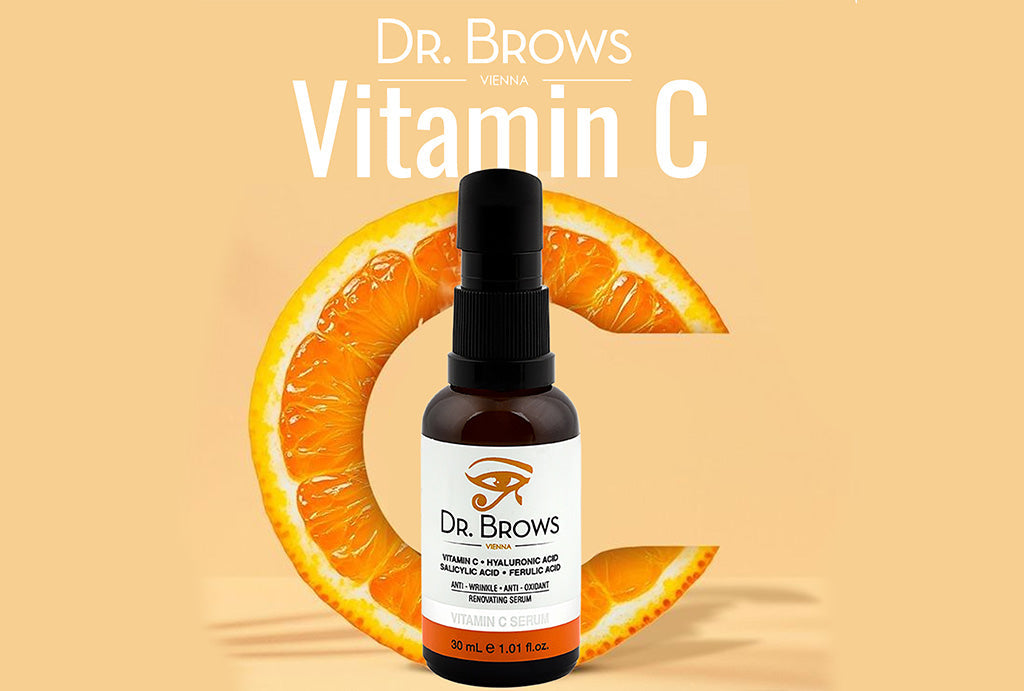
Dr.Brows Vitamin C Brightening Serum
Formulated for those seeking a more radiant, even-toned complexion, Dr.Brows Vitamin C Brightening Serum serves as an essential morning antioxidant step. Layer it under your daily SPF to elevate your daytime defense. Visit the Vitamin C Brightening Serum product page to learn more and shop.
To address stubborn, pronounced dark spots, pair your routine with our targeted Tranexamic Acid Serum.
Frequently Asked Questions
Should Vitamin C serum be applied in the morning or evening?
It is primarily used in the morning to maximize its antioxidant defense against daily environmental stressors.
Can I use Vitamin C and sunscreen together?
Yes, they are highly synergistic. Vitamin C reinforces the protective benefits of daily SPF.
Can Vitamin C and retinol be used at the same time?
It is best to separate them: apply Vitamin C in the morning and Retinol in the evening.
Does Vitamin C serum help with dark spots?
Yes, it helps visibly diminish dark spots and tone irregularities. For stubborn or chronic pigmentation, consult a dermatologist.
Why does Vitamin C serum change color?
Pure ascorbic acid oxidizes gradually upon exposure to air and light. Storing your serum in a cool, dark place preserves its stability.
Disclaimer: This content is for informational purposes only and does not constitute medical advice. Please consult a dermatologist for specific skin concerns.


